
Which Inverter Is Best for 200Ah Battery for Home? Pick-Your-Setup Guide (2027)
13 October 2026
Which Inverter Is Best for 200Ah Battery for Home?
The short answer: For most homes, the best inverter for a 200Ah battery is a 1 kVA to 1.1 kVA pure sine wave inverter on a 12V system. Pick a hybrid MPPT inverter if you want solar charging, and move to 24V with two batteries if your load is above about 800W. Add up your appliances first, because the load decides the size.
Buy a Lento inverter from the official Lento website or on Amazon India, then use the steps below to choose the right one.
Pick Your Home in 30 Seconds
Find the row closest to your home. Backup times assume a 12V 200Ah battery, about 85% inverter efficiency, and about 50% usable capacity for tubular or about 90% for lithium.
| Your home | Typical load | Best inverter | Backup (tubular / lithium) |
|---|---|---|---|
| Studio or 1BHK | About 200W | 800 VA–1 kVA pure sine wave, 12V | About 5 h / about 10 h |
| Work from home setup | About 150W | 800 VA pure sine wave, 12V | About 6–7 h / about 13 h |
| 2BHK, no fridge on backup | About 370W | 1 kVA pure sine wave, 12V | About 2.8 h / about 5.5 h |
| 2BHK with fridge | About 520W | 1.1 kVA pure sine wave, 12V | About 2 h / about 4 h |
| 3BHK or heavy use | 800W and above | 1.5 kVA and above, 24V with two batteries | About 2.5 h at 800W / about 5 h |
| Home with rooftop panels | Varies | Hybrid MPPT solar inverter | Depends on solar input |
These are estimates, and your actual backup depends on battery age, temperature, and how the load changes.
Step 1: Add Up Your Load
The inverter size comes from your load, not from the battery. List the appliances you want during a power cut, then add their wattage. Typical figures are below, but check the label on each appliance.
| Appliance | Typical wattage | Quantity | Total |
|---|---|---|---|
| Ceiling fan | 70W | 2 | 140W |
| LED bulb | 10W | 5 | 50W |
| Wi-Fi router | 15W | 1 | 15W |
| LED TV | 100W | 1 | 100W |
| Phone and laptop chargers | 65W | 1 | 65W |
| Running total | 370W |
Worked example:
- The running load is 370W.
- A refrigerator adds about 150W, bringing the total to about 520W.
- Add about 25% headroom for surges, giving about 650W.
- Inverters are rated in VA, and VA is usually higher than watts, with 1 kVA often delivering about 800W. A 1 kVA inverter is the right fit.
If you are unsure about a fridge or pump, check the appliance’s starting (surge) rating. Compressors and motors draw much more for a moment when they start.
Step 2: Match the Voltage to Your Battery
- 12V inverter: uses one 12V 200Ah battery. This suits loads up to about 1.1 kVA.
- 24V inverter: uses two 12V batteries in series. This suits loads above about 800W to 1,000W, because lower current means less heat and voltage drop.
Never mix voltages. Check the inverter’s rated battery voltage before you buy.
Step 3: Choose the Inverter Type
Pure Sine Wave Inverter: the Default for Homes
A pure sine wave inverter gives smooth, stable power for fans, TVs, fridges, and laptops. It is the safest choice for a 200Ah battery at home.
Hybrid Solar Inverter: the Choice for Lower Bills
A hybrid solar inverter uses solar panels, the grid, and the battery together.
- An MPPT solar inverter suits larger panel arrays and gets more power from them.
- A PWM household solar inverter suits smaller, budget setups.
Read about the best solar inverter with lithium battery if you plan to go solar.
Inbuilt Lithium Inverter: the Choice for Low Maintenance
If you want the inverter and battery as one compact package, see Lento’s sine wave inverter with inbuilt lithium battery.
Step 4: Choose the Battery Type
| Tubular (lead-acid) | Lithium (LiFePO4) | |
|---|---|---|
| Usable capacity | About 50% | About 80–90% or more |
| Maintenance | Distilled water top-ups | None |
| Upfront cost | Lower | Higher |
| Backup from the same rating | Baseline | About double |
Tubular suits tight budgets. Lithium suits homes that want long life and no upkeep. For deeper comparisons, read about the best lithium inverter for home and the best inverter with battery for home.
Step 5: Check These Specs Before You Buy
- Pure sine wave output
- Battery voltage (12V or 24V) matches your battery
- Overload, short-circuit, and low-battery protection
- Wide input voltage range, useful where mains voltage swings
- Charge current suited to a 200Ah battery
- Battery compatibility: tubular, gel, SMF, or lithium
- Warranty and local service in your city
- Solar readiness if you may add panels later
Which Inverter Is Best for 200Ah Battery for Home? Lento Options
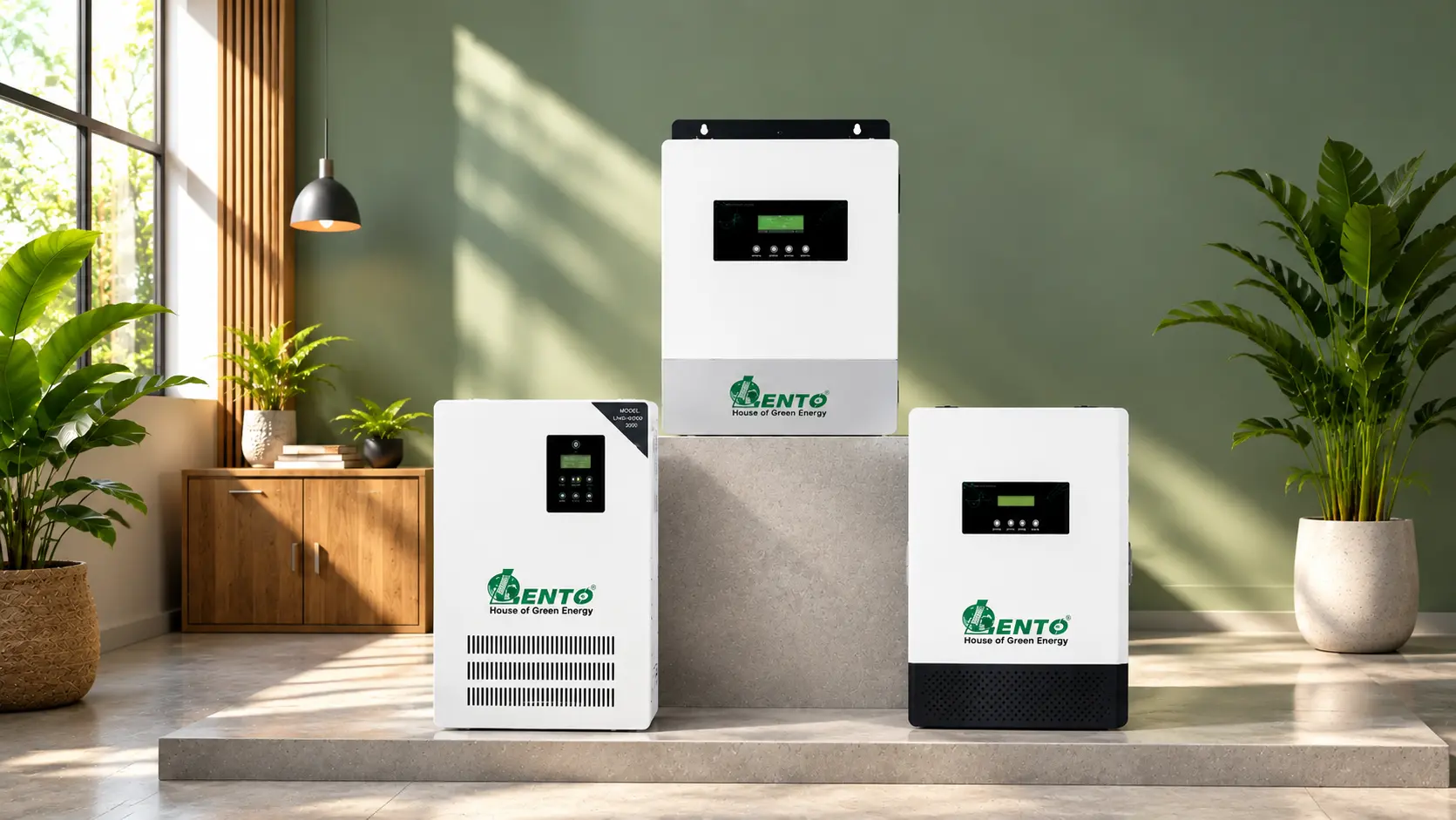
Lento offers pure sine wave, hybrid solar, and lithium inverters for home use. Amazon listings show indicative prices like these (some are inverter-plus-battery packages, so confirm what is included):
| Lento model | Best for | Indicative price |
|---|---|---|
| 1.1 kVA 12.8V lithium inverter | 2BHK, low maintenance | about ₹27,300–₹29,700 |
| 2.1 kVA 25.6V lithium inverter UPS | Heavier home loads | about ₹44,100–₹53,700 |
| 2.5 kVA 24V solar hybrid inverter (MPPT) | Home with solar | about ₹24,000 lento 1 1kva 12 8v lithium 8C1kjsG5 +2 |
More Lento options:
- Hybrid solar inverter with inbuilt lithium battery (PWM)
- Hybrid solar inverter with inbuilt lithium battery (MPPT)
- On-grid solar inverter
For more on lithium, read about an inverter with inbuilt lithium battery for home, compare an inverter with lithium ion battery for home, see how a lithium inverter with battery works, read the basics of a lithium inverter for home, or browse the best inverter with Li-ion battery in India.
Mistakes to Avoid
- Buying by battery size instead of by load
- Choosing a modified sine wave inverter for TVs, fridges, or computers
- Running an air conditioner on a single 200Ah battery, which can’t supply it for any useful time
- Mixing 12V and 24V parts
- Draining a tubular battery to zero
- Using thin cables or skipping fuses on the battery line
- Using lead-acid charge settings on a lithium battery
Care Tips for a Longer Life
- Keep the inverter and battery in a dry, ventilated, shaded spot.
- Check terminals regularly and keep them tight and clean.
- Top up tubular batteries with distilled water as the maker advises.
- Don’t exceed the inverter’s rated load.
- If the inverter acts up, read how to reset an inverter safely.
- Compare this guide with our posts on which inverter is best for 200Ah battery, which inverter is best for a 200Ah lithium battery, and which inverter is best for 200Ah battery in India.
B2B and Export
Lento India manufactures inverters and supplies 24+ countries. For bulk orders, distributorship, or commercial projects, contact the team through the Lento website.
The Bottom Line
So, which inverter is best for 200Ah battery for home? Add up your load, then match it: a 1 to 1.1 kVA pure sine wave inverter for most homes, a hybrid MPPT inverter for solar, and a 24V system for heavy loads. Choose lithium for low upkeep and tubular for a lower upfront cost. Whatever you choose, expect realistic backup times rather than the textbook figure. Lento’s range covers all three types. Ready to buy? Visit the official Lento website or check Lento on Amazon India.
Frequently Asked Questions
1. Which inverter is best for a 200Ah battery for home?
A 1 to 1.1 kVA pure sine wave inverter on a 12V system suits most homes. Choose a hybrid MPPT inverter for solar, and a 24V system for loads above about 800W.
2. What size inverter do I need for a 200Ah battery?
Add up your appliance wattage, add about 25% headroom, and pick an inverter slightly above that. For most homes, this means 800 VA to 1.1 kVA.
3. How long does a 200Ah battery last at home?
Roughly 5 hours at 200W or 2.5 hours at 400W with a tubular battery. A lithium battery of the same rating gives about double.
4. Can a 200Ah battery run a fridge and fans together?
Yes, for a couple of hours, if the inverter handles the fridge’s starting surge. Use at least a 1 kVA inverter and check the fridge’s label.
5. Can I use a 1.5 kVA inverter with one 200Ah battery?
Usually not. A 1.5 kVA inverter normally needs 24V with two batteries. Check the inverter’s rated battery voltage.
6. Is a pure sine wave inverter necessary for home?
It is the safer choice for TVs, fridges, computers, and medical equipment, because the power is smooth and stable.
7. Is a lithium battery worth it for a 200Ah home setup?
Often yes. It gives more usable capacity, charges faster, lasts longer, and needs no maintenance, but costs more upfront.
8. Can I add solar panels to a 200Ah battery setup?
Yes, with a hybrid or off-grid solar inverter. Make sure the charge settings suit your battery type.
9. Can a 200Ah battery run an air conditioner?
Not practically. An air conditioner draws far more power than one 200Ah battery can supply for any useful time.
10. Where can I buy a Lento inverter for home?
From the official Lento website or Amazon India.
Read More
- Best Inverter for Home in India
- Best Inverter with Lithium Ion Battery for Home in India
- Best Lithium Inverter for Home
- Inverter with Inbuilt Lithium Battery for Home
- Best Inverter with Battery for Home
- Best Solar Inverter with Lithium Battery
- Lithium Inverter for Home
- Lithium Inverter with Battery
- Best Inverter with Li-Ion Battery in India