
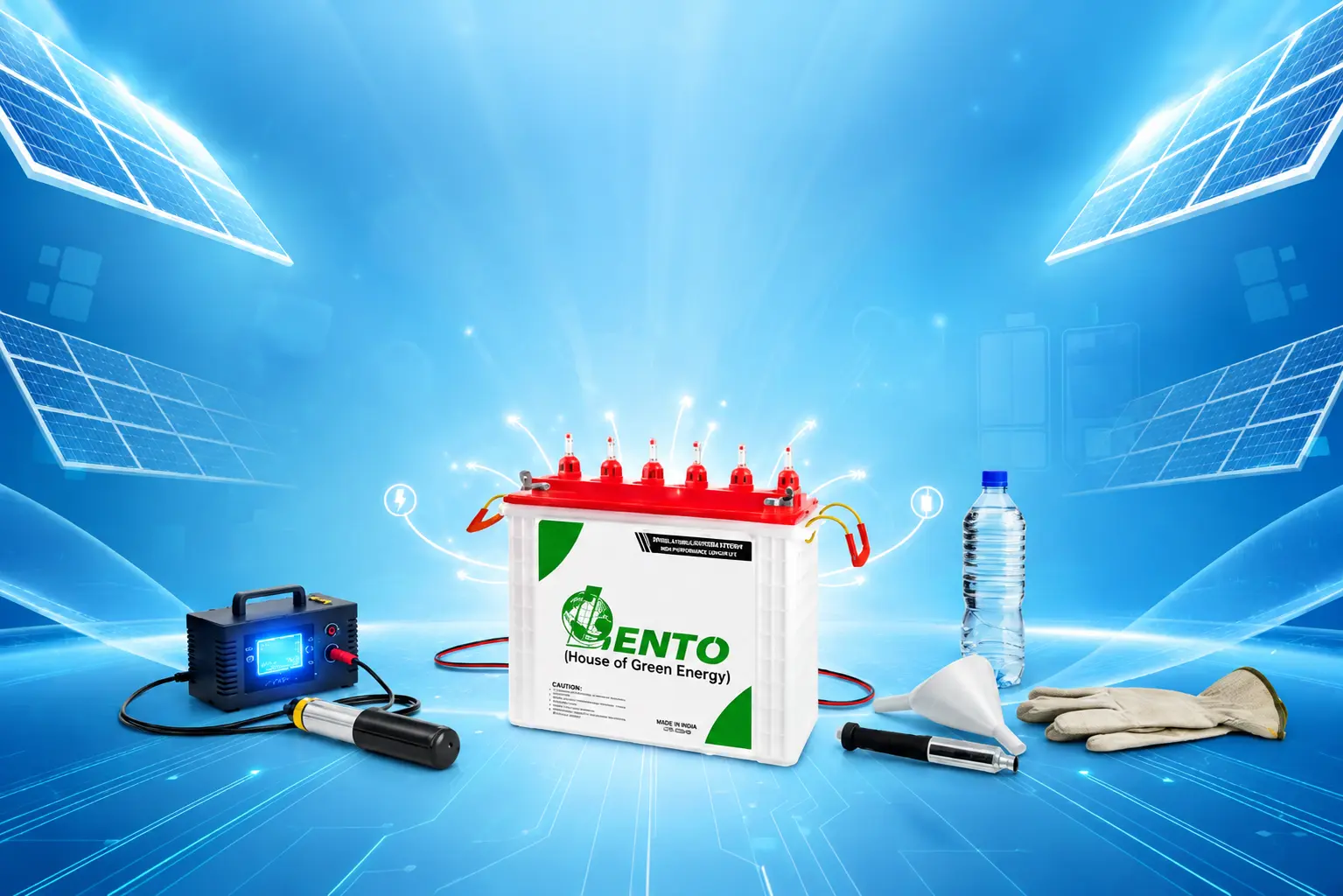
Can You Revive a Completely Dead Battery? How to Revive a Dead Tubular Battery
15 October 2026
Quick Answer: Can You Revive a Completely Dead Battery?
Sometimes, yes. A dead tubular battery can often be revived if the problem is low electrolyte, corroded terminals, deep discharge, or early-stage sulfation. It cannot be revived if it has physical damage (swelling, cracks, leaks), a shorted cell, or badly worn plates. The only reliable way to know is to test it: check the resting voltage, the electrolyte level, and the specific gravity before attempting any fix.
Key Takeaways
- A battery that looks “dead” is often just dried out, corroded, or deeply discharged, and these problems are fixable.
- Dead tubular battery repair works best on batteries under about 4 to 5 years old with no physical damage.
- Never attempt revival on a swollen, cracked, or leaking battery.
- Use only distilled water and a charger matched to your battery’s voltage.
- Good tubular battery maintenance prevents most failures.
What Does a “Completely Dead” Battery Actually Mean?
A battery is considered dead when it can no longer hold enough charge to run your appliances for a useful time. This falls into two very different categories:
- Discharged or neglected battery (recoverable): The battery is flat, dried out, corroded, or lightly sulfated. The plates and internal structure are still intact.
- Failed battery (not recoverable): The plates are heavily sulfated or shedding material, a cell has shorted, or the case is damaged. No amount of charging will bring it back.
Understanding this difference is the key to dead battery repair. Most guides skip it, and people waste weeks trying to revive a battery that was already beyond saving.
How to Check If a Tubular Battery Is Dead
Before you attempt a fix, confirm what you are dealing with. These checks take about 15 minutes.
Common signs of a dead tubular battery:
- Tubular battery backup drops to a few minutes
- Battery not charging, even after many hours on the inverter
- The inverter shows a constant low-battery alarm
- A rotten-egg smell during charging
- Swelling, cracks, or leakage
Tests to confirm:
| Test | Tool | What a healthy battery shows | What a dead battery shows |
|---|---|---|---|
| Resting voltage (12V battery) | Multimeter | About 12.6 to 12.8V | Below about 11.8V suggests deep discharge; near or below 10.5V suggests serious damage or a dead cell |
| Specific gravity | Hydrometer | About 1.240 to 1.280 per cell | Low readings, or a large gap between cells |
| Electrolyte level | Visual check | Plates fully covered | Plates exposed |
| Physical condition | Visual check | Straight case, no leaks | Swelling, cracks, acid residue |
Take voltage readings with the battery disconnected and rested for a few hours. Figures are typical for flooded tubular lead-acid batteries, so confirm against your manufacturer’s specifications.
Is it the battery or the inverter? A battery not charging is sometimes an inverter or charger fault. If a separate charger brings the battery back to normal voltage, the original charging circuit is the problem. Also check compatibility, as our suitable inverter for 200Ah battery guide explains.
Why Tubular Batteries Die: The Most Common Causes
| Cause | What happens | Revivable? |
|---|---|---|
| Low electrolyte | Exposed plates dry out and sulfate | Often, if caught early |
| Corroded terminals | Current flow is blocked | Yes |
| Deep discharge | Battery sits flat and sulfates | Sometimes |
| Sulfation | Hard lead sulfate crystals coat the plates | Partly, if mild |
| Overcharging | Water loss and plate corrosion | Rarely |
| Overloading | Repeated deep discharges | Sometimes |
| Old age (5+ years) | Plates wear out | Usually not |
Overloading is a common hidden cause. Our guide on inverter capacity for a 200Ah battery shows how to size the load correctly.
How to Revive a Dead Tubular Battery: Step-by-Step
Safety First
Batteries release hydrogen gas while charging and contain sulfuric acid. Always:
- Work in a ventilated area with no sparks or open flames
- Wear safety goggles and acid-resistant gloves
- Never add acid yourself unless you are trained to do so
- Stop immediately if the battery gets hot, bulges, or leaks
Step 1: Inspect the Battery
Look for swelling, cracks, and leaks. If you see any, stop and replace the battery. It cannot be safely revived.
Step 2: Clean the Terminals
Disconnect the cables. Scrub corrosion with a baking soda and water paste and a brush, wipe clean, and reconnect tightly. This alone solves many cases of tubular battery issues.
Step 3: Check and Top Up the Electrolyte
Open the vent caps and look at the plates. If they are exposed, add distilled water until they are just covered. Never use tap water. Do the final top-up to the indicator level after charging, because electrolyte rises while charging.
Step 4: Recharge the Dead Tubular Battery Slowly
This is the core of how to recharge a dead tubular battery:
- Use a dedicated charger suited to flooded tubular batteries at the right voltage
- Charge at a low current. A common guideline is around 10% of the battery’s Ah rating, but follow your manufacturer’s specification
- Continue until voltage and specific gravity stop rising. For a large battery this can take well over 10 to 12 hours, so don’t stop on a fixed timer
- Check that the battery stays cool throughout
Step 5: Retest
Let the battery rest, then measure voltage and specific gravity again. Reconnect it to the inverter and run a backup test. If it holds the load, the revival worked.
Step 6: Advanced Options (Professional Help Recommended)
- Equalization charge: A controlled, slightly higher-voltage charge that mixes stratified electrolyte and helps break down sulfate. Done wrongly, it overheats the battery.
- Electrolyte replacement: Draining and replacing contaminated electrolyte. It involves handling acid, so leave it to a technician.
- Desulfation additives or pulse desulfators: These claim to dissolve sulfate crystals. Results vary, so treat them as a possible help, not a guarantee.
How to Revive a Dead Inverter Battery at Home: DIY vs Professional
| Task | DIY | Professional |
|---|---|---|
| Visual inspection | ✔ | |
| Cleaning terminals | ✔ | |
| Topping up distilled water | ✔ | |
| Slow charging with an external charger | ✔ | |
| Voltage and gravity testing | ✔ (with tools) | |
| Equalization charge | ✔ | |
| Electrolyte replacement | ✔ | |
| Pulse desulfation | ✔ (recommended) |
Repair or Replace? How to Decide
Repair if:
- The battery is under about 4 to 5 years old
- The case is intact
- Voltage and specific gravity recover after a slow charge
Replace if:
- The case is swollen, cracked, or leaking
- One cell reads far lower than the others after charging
- Backup stays poor after a full recharge
- The battery is more than 5 years old and the repair costs approach a new battery
When replacement is the right call, compare your options in our guide on which brand tubular battery is best or see the top 10 inverter batteries in India. Lento’s C10 tubular batteries suit regular home and small commercial use, while the C20 range is built for longer cycle life in heavier applications. You can browse the full Lento lead acid tubular battery range or contact our team for help sizing a battery to your load.
Tubular Battery Maintenance: How to Prevent a Dead Battery
Regular tubular battery maintenance is the best form of battery troubleshooting:
- Check water levels every 2 to 3 months, and more often in summer
- Use only distilled water
- Keep terminals clean and tight
- Keep the battery in a ventilated, cool place
- Recharge fully after each long power cut
- Avoid overloading the inverter
- Give idle batteries a full charge every 2 to 3 months
- Check backup performance regularly using our battery backup time calculator
For more battery care answers, visit the Lento solar battery FAQ section.
Frequently Asked Questions (FAQs)
Can you revive a completely dead battery?
Sometimes. If the battery is dead because of low electrolyte, corrosion, deep discharge, or mild sulfation, it can often be revived with cleaning, distilled water, and slow charging. If it is swollen, leaking, has a shorted cell, or has badly worn plates, it cannot be revived.
How do I revive a dead tubular battery?
Inspect it for damage, clean the terminals, top up with distilled water, and charge it slowly with a dedicated charger until voltage and specific gravity stop rising. Then retest it under load.
How do I repair a dead tubular battery at home?
You can safely clean terminals, top up distilled water, inspect for damage, and slow charge. Equalization charging and electrolyte replacement should be done by a professional.
Why is my tubular battery not charging?
The most common causes are low electrolyte, corroded or loose terminals, deep discharge, sulfation, a faulty charger or inverter, or old age. Test the battery with a multimeter and try an external charger to find out which.
How do I check if a tubular battery is dead?
Measure resting voltage with a multimeter and electrolyte strength with a hydrometer. A resting voltage well below 12V, uneven cell readings, or backup lasting only minutes point to a dead or failing battery.
Can I use tap water to revive a tubular battery?
No. Tap water contains minerals that damage the plates. Use only distilled water.
How long does it take to recharge a dead tubular battery?
It depends on the battery’s capacity and the charger’s current. Large batteries can take well over 12 hours. Charge until voltage and specific gravity stop rising, and follow the manufacturer’s guidance.
Do desulfation additives work?
Results vary. They may help with mild sulfation but are not a guaranteed fix, and they cannot repair physically damaged plates.
How long does a tubular battery last?
Typically 3 to 5 years, depending on usage, climate, and maintenance.
When should I replace instead of repair?
Replace the battery if it is swollen, cracked, or leaking, if it is more than about 5 years old, or if backup stays poor after a full recharge and the fixes above.
Conclusion
So, can you revive a completely dead battery? In many cases, yes. A dead tubular battery caused by low water, dirty terminals, or deep discharge can often be restored with simple, careful steps. But when the battery is physically damaged, old, or has failed cells, replacement is the safer and smarter choice.
Test first, repair what is repairable, and maintain the battery well afterward. When it is time for a new one, explore Lento tubular batteries for reliable backup you can count on.
Read More
-
Which Brand Tubular Battery Is Best? Buying Guide for Indian Homes
-
Top 10 Inverter Batteries in India: Best Tubular, SMF and Lithium Options for Home Backup
-
150Ah Battery Backup Time Calculator: How Many Hours Will It Run? (Formula + Chart)
-
Inverter Capacity for 200Ah Battery: Formula, Chart & Calculator
-
Suitable Inverter for 200Ah Battery: The 6-Point Compatibility Guide