
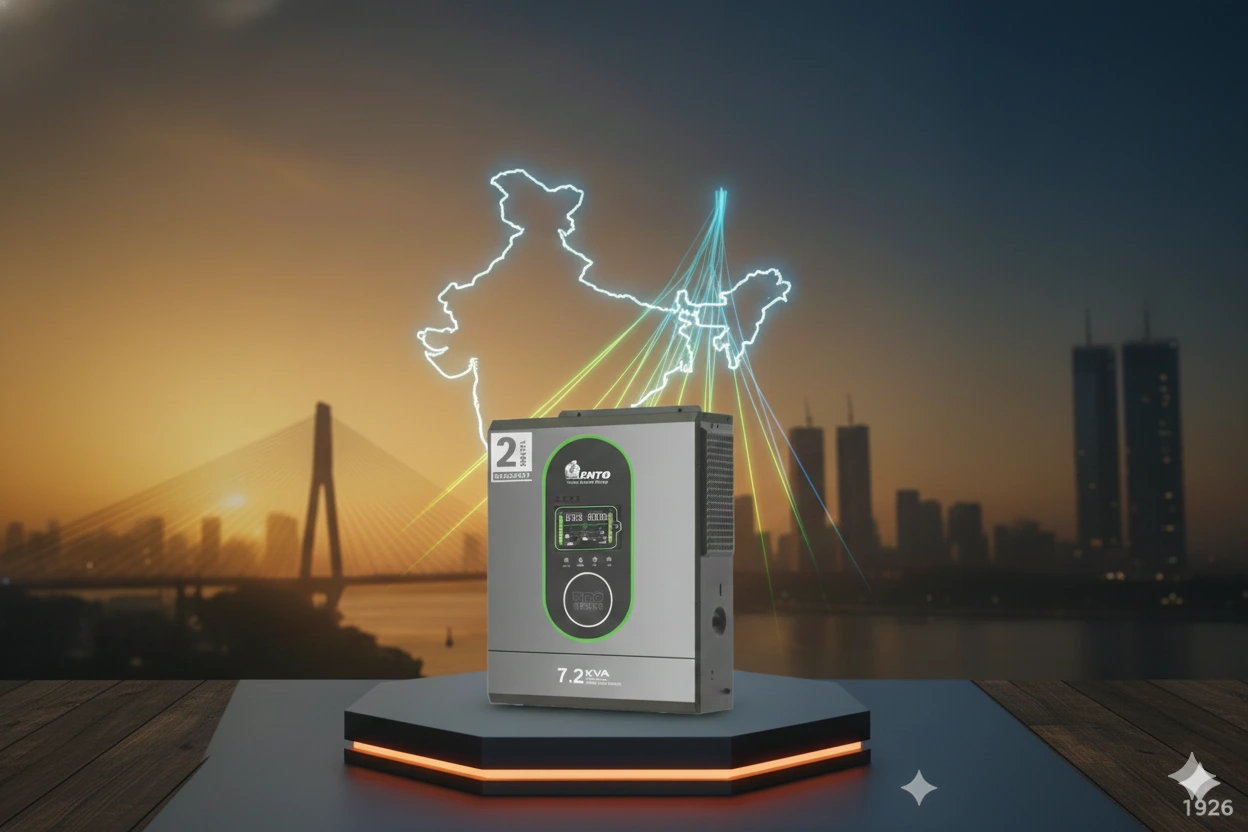
What Can a 10kVA Inverter Carry?
05 December 2025
Whenever someone asks me about inverter capacity—especially large ones like 10kVA—I always say the same thing: your inverter is only as good as your understanding of what it can actually handle. Over the years of working in the power backup industry, solar solutions, and online UPS systems, I’ve seen people both underuse and overload their inverters simply because they weren’t aware of the right load calculations.
So today, I’m going to walk you through a simple, clear, and practical guide on what a 10kVA inverter can carry, whether you’re a homeowner, business owner, dealer, or someone planning to install a new backup system. I’ll also share some insights from my experience working with brands like Lento and even highlight important points for those searching for an online ups manufacturer, online ups supplier, or online ups trader.
Let’s begin.
Understanding the Power of a 10kVA Inverter
A 10kVA inverter is not your average home inverter. It’s a heavy-duty power backup device designed for:
-
Large homes
-
Offices
-
Shops
-
Small industries
-
Commercial spaces
-
Schools
-
Clinics and hospitals
-
Solar-powered systems
To put it simply, it’s a reliable powerhouse that can run multiple high-load appliances simultaneously without stress—but only if sized and used correctly.
Before we go deeper into what it can carry, let me walk you through the math behind understanding inverter capacity.
How Much Load Can a 10kVA Inverter Handle?
A “10kVA” inverter is rated in kVA, not kW, and this is where many customers get confused.
kVA vs kW — The Real Capacity
-
kVA = Apparent Power
-
kW = Real Power
To convert kVA to kW, we use the formula:
kW = kVA × Power Factor
Most inverters used in homes and commercial spaces have a power factor between 0.7 and 0.8. So, for a 10kVA inverter:
10kVA × 0.8 = 8kW actual usable power
This means your 10kVA inverter can safely run approximately 8000 watts of load.
Now that we know the real wattage, let’s break down what that really means in everyday usage.
What a 10kVA Inverter Can Carry (Practical Examples)
Here are the typical appliances and equipment that a 10kVA inverter can comfortably power.
1. Household Loads
If you're installing a 10kVA inverter in a villa, large flat, or residential building, it can easily support:
-
12–15 ceiling fans
-
20–25 LED lights
-
1–2 refrigerators
-
1 deep freezer
-
1 washing machine
-
1 microwave oven
-
1–2 TVs
-
1 water pump (1 HP)
-
Mixers, grinders, irons, and small appliances
In short, it can run an entire home without any stress.
2. Air Conditioners (ACs)
This is where most people really need clarity.
A 10kVA inverter can run:
-
Two 1.5-ton ACs, or
-
One 2-ton AC + other loads, or
-
Three 1-ton ACs (depending on starting power)
Modern inverter ACs consume less starting power, which gives you more room for additional loads.
3. Offices and Commercial Spaces
In commercial applications, a 10kVA inverter is perfect for:
-
10–12 computers
-
1–2 printers
-
Broadband/networking equipment
-
LED lighting for the entire space
-
Server systems (if load-balanced)
-
Cash counting machines and scanners
Many retail shops also use 10kVA inverters to run complete lighting setups, billing systems, fans, and air-conditioning simultaneously.
4. Industrial Use
For small manufacturing units, repair workshops, and industrial spaces, a 10kVA inverter can support:
-
Drilling machines
-
Soldering stations
-
Small compressors
-
CNC mini machines
-
Power tools
-
Motor loads (up to 1–2 HP combined)
However, motor loads require proper surge calculation—something a qualified installer should help with.
5. Clinics, Hospitals & Schools
In facilities where uninterrupted power is crucial, a 10kVA inverter supports:
-
Medical refrigerators
-
Lights and fans
-
Computers
-
Dental chairs
-
Small medical machines
-
Classroom lighting + digital boards
This makes it a safe and reliable backup for educational and healthcare setups.
Battery Requirement for a 10kVA Inverter
Now that we know what it can run, let's talk about how long it can run. Backup duration depends on battery capacity.
A 10kVA inverter is usually paired with:
-
48V battery bank (4 batteries of 12V each), or
-
96V/120V systems for industrial-grade models
For longer backup (4–8 hours), deep-cycle tubular batteries are preferred.
Typical battery setups include:
-
4 × 200Ah batteries
-
8 × 200Ah batteries (for longer runtime)
If you’re planning a solar hybrid setup, a 10kVA system works beautifully with:
-
5kW–10kW solar panels
-
MPPT solar charge controllers
-
Lithium-ion battery banks for premium users
This is why many online ups manufacturers and online ups suppliers also build hybrid inverter models that pair perfectly with solar.
Who Should Choose a 10kVA Inverter?
Over the years, I’ve noticed that customers who buy 10kVA inverters usually fall into these categories:
1. Large Homes
Homes with ACs, deep freezers, power-hungry appliances, or multiple floors find 10kVA inverters the perfect fit.
2. Offices
Small to mid-sized offices need a stable power solution for computers, lights, and equipment.
3. Shops & Showrooms
Especially mobile stores, grocery shops, fashion showrooms, and restaurants.
4. Small Industries
Repair workshops, processing units, and manufacturing setups.
5. Medical Facilities
Clinics, labs, and diagnostic centers that require uninterrupted power.
Why 10kVA Inverters Fail — And How to Avoid It
Even a powerful 10kVA inverter can fail if mishandled. Here are the main reasons I’ve seen:
-
Overloading the inverter
-
Poor wiring or wrong cable gauge
-
Weak or old batteries
-
Using different battery brands together
-
Lack of ventilation
-
Low-quality inverters from unknown sellers
Always choose a trusted brand, ideally from a reputed online ups manufacturer, online ups supplier, or online ups trader who understands safety standards and delivers reliable after-sales support.
Tips to Maximize the Life of Your 10kVA Inverter
From my years of experience, these simple practices can dramatically increase your inverter’s life:
-
Keep batteries fully charged
-
Use the correct battery bank
-
Avoid overloading
-
Ensure proper ventilation
-
Clean terminals regularly
-
Perform monthly maintenance checks
-
Use pure sine wave models for better appliance health
These practices not only protect your inverter but also significantly reduce long-term costs.
Is a 10kVA Inverter Suitable for Solar?
Yes—in fact, it’s one of the best capacities for solar homes and businesses.
Solar-compatible 10kVA inverters allow:
-
Higher panel capacity
-
Faster charging
-
Longer backup
-
Lower electricity bills
Many solar installation companies prefer 10kVA hybrid models for commercial customers because they offer both off-grid and on-grid flexibility.
My Final Thoughts — Is the 10kVA Inverter Worth It?
Absolutely.
A 10kVA inverter is one of the most versatile, reliable, and future-proof power backup solutions for anyone who needs dependable electricity. Whether you're setting up a large home, a business, a warehouse, or a healthcare facility, it provides the perfect balance of power, load support, and long-term performance.
When paired with high-quality batteries and sourced from a reliable online ups manufacturer, online ups supplier, or online ups trader, it can easily last for years with minimal maintenance.
In short—a 10kVA inverter is a powerhouse you can depend on.
Conclusion
Now that you know exactly what a 10kVA inverter can carry—and how to use it correctly—you’re in a much better position to choose the right backup system for your home or business. A well-selected inverter won’t just run your appliances; it will also bring peace of mind, stability, and long-term savings.
If you're planning to purchase, distribute, or upgrade to a high-load inverter system, this is the perfect time to take action.