
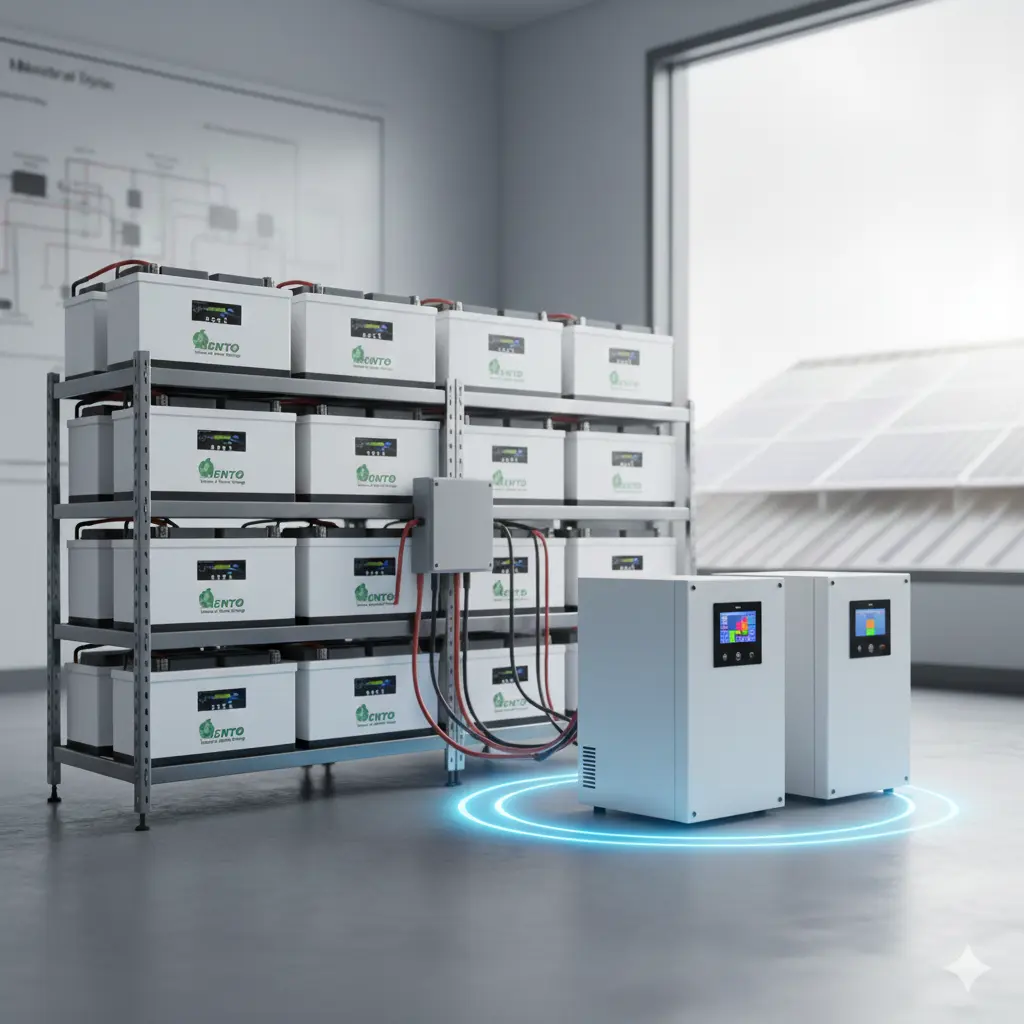
How Many Batteries for a 10 kVA Inverter? A Practical and Easy Guide
12 January 2026
If you are planning to install a high-capacity power backup system, one common and important question is how many batteries for a 10 kVA inverter are required. A 10 kVA inverter is typically used in large homes, offices, shops, hospitals, or small industries, and choosing the right number of batteries is critical for performance, safety, and backup time.
In this blog, I’ll explain the battery calculation in a simple, human-written way, covering battery voltage, Ah rating, backup time, and real-world considerations so you can make the right decision confidently.
Understanding a 10 kVA Inverter
A 10 kVA inverter usually delivers around 8,000 watts (8 kW) of real power, assuming a standard power factor of 0.8. This means it can handle heavy loads such as air conditioners, servers, machines, lifts, or multiple office appliances simultaneously.
Because of the high power requirement, a 10 kVA inverter cannot work with a single battery. It needs a properly designed battery bank.
Step 1: Know the DC Battery Voltage of a 10 kVA Inverter
Most 10 kVA inverters operate on higher DC voltages to reduce current and energy loss. Common DC system voltages are:
-
96V DC
-
120V DC
-
180V DC
-
192V DC
The exact voltage depends on the inverter brand and model. Always check the inverter specification before selecting batteries.
Step 2: How Many Batteries Are Needed Based on Voltage?
Most inverter batteries are 12V batteries. To reach the required DC voltage, batteries are connected in series.
Here’s a simple calculation:
-
96V system: 96 ÷ 12 = 8 batteries
-
120V system: 120 ÷ 12 = 10 batteries
-
180V system: 180 ÷ 12 = 15 batteries
-
192V system: 192 ÷ 12 = 16 batteries
👉 So, the minimum number of batteries for a 10 kVA inverter ranges from 8 to 16, depending on the inverter’s DC voltage.
Step 3: Choosing the Right Battery Ah Rating
The number of batteries only decides voltage, not backup time. Backup duration depends on battery Ah (Ampere-hour) capacity.
Common battery options:
-
100Ah
-
150Ah
-
180Ah
-
200Ah
Example Backup Calculation
Let’s assume:
-
Inverter load: 5,000 watts
-
Battery bank: 16 batteries × 12V × 150Ah
-
Battery efficiency: 80%
Usable energy:
12 × 150 × 16 × 0.8 = 23,040 watt-hours
Backup time:
23,040 ÷ 5,000 ≈ 4.6 hours
This shows how increasing Ah rating increases backup time without changing the number of batteries.
Step 4: Battery Type Matters
Different battery technologies affect performance and lifespan:
Tubular Batteries
-
Most common for large inverters
-
Long life and stable performance
-
Require periodic maintenance
SMF (Sealed Maintenance Free) Batteries
-
No water topping
-
Slightly shorter life than tubular
-
Suitable for offices and UPS systems
Lithium-Ion Batteries
-
High efficiency and fast charging
-
Require fewer batteries
-
Higher upfront cost but long lifespan
Keywords like 10 kVA inverter battery calculation, inverter battery bank design, UPS battery requirement, industrial inverter batteries, and battery backup calculation are often searched by users planning large power systems.
Step 5: How Backup Time Affects Battery Count
If you need longer backup:
-
Increase battery Ah rating
-
Add parallel battery strings (if inverter supports it)
For example:
-
Short backup (1–2 hours): 150Ah batteries are sufficient
-
Medium backup (3–4 hours): 180Ah or 200Ah batteries recommended
-
Long backup (6+ hours): Larger battery bank or lithium batteries preferred
Common Mistakes to Avoid
-
Using fewer batteries than required DC voltage
-
Mixing old and new batteries
-
Choosing low Ah batteries for heavy loads
-
Ignoring inverter efficiency and power factor
-
Not planning for future load expansion
Frequently Asked Questions (FAQ)
1. Is it better to have 2×100Ah batteries or 1×200Ah battery?
Both give equal capacity, but one 200Ah battery is better due to fewer connections and lower energy loss.
2. How many AC can a 10kVA inverter carry?
A 10kVA inverter can run 3 to 4 standard 1.5-ton ACs, depending on efficiency and other loads.
3. How many batteries are needed for 10kW?
For a 10kW system, you typically need 12–16 batteries (12V each) depending on inverter DC voltage.
4. How many 200Ah batteries for a 10kVA inverter?
Most 10kVA inverters require 8 to 16 units of 200Ah batteries, based on DC system voltage (96V–192V).
5. How many AC can run in 10kW?
A 10kW system can run 3–4 air conditioners or 2 ACs plus other heavy appliances comfortably.
Conclusion
So, how many batteries for a 10 kVA inverter depends mainly on the inverter’s DC voltage and your required backup time. In most cases, you will need 8 to 16 12V batteries, with Ah capacity selected based on how long you want backup power. By choosing the right battery type, correct voltage configuration, and proper Ah rating, you can ensure reliable performance, longer battery life, and uninterrupted power for your home or business.