
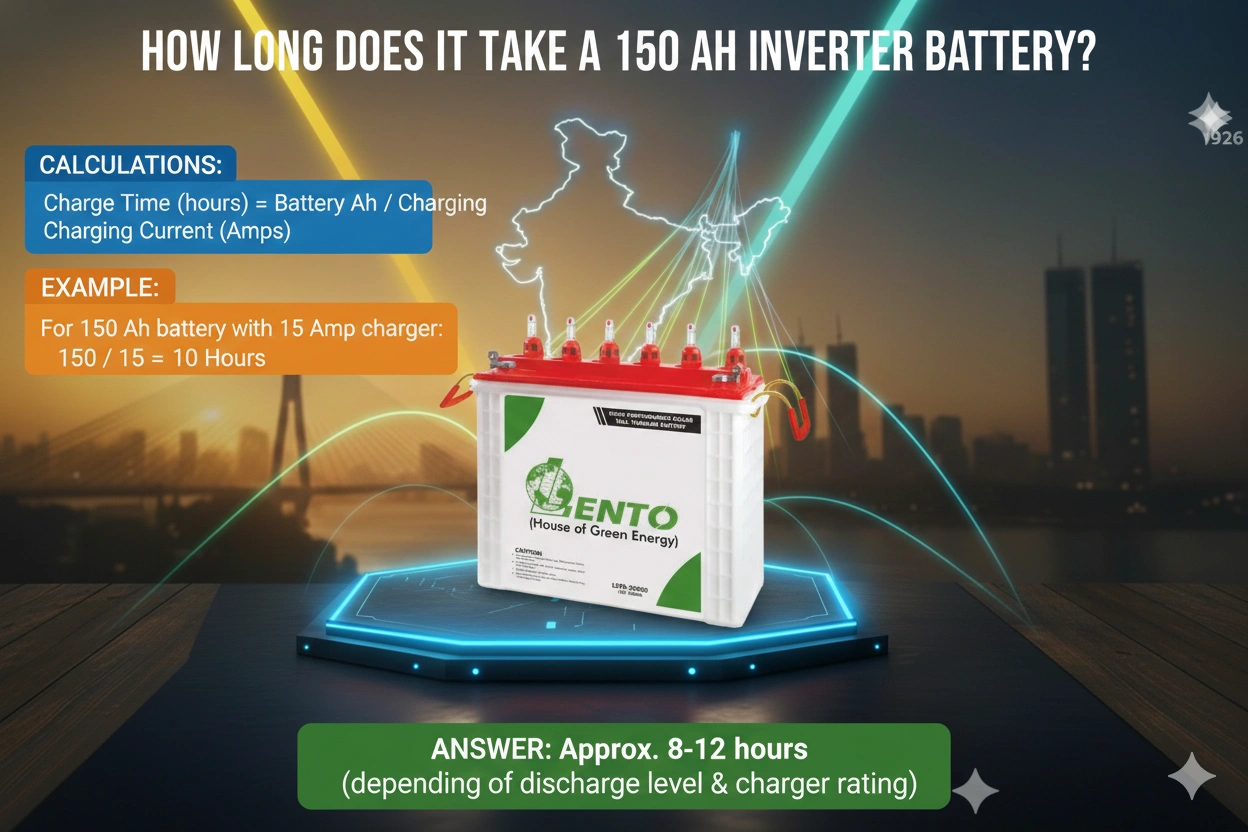
how long does it take to charge a 150 ah inverter battery
05 December 2025
Charging a 150Ah inverter battery efficiently is crucial for maintaining consistent backup power at home or in a business setup. Whether you are sourcing your batteries from a trusted tubular battery manufacturer, lithium ion battery manufacturer, or working with a solar inverter manufacturer or online UPS manufacturer, understanding the charging time helps you plan usage, avoid overcharging, and prolong battery life.
In this blog, I’ll explain the factors that affect charging time, different charging methods, and practical tips to optimize your 150Ah battery performance.
Understanding Battery Capacity and Charging Time
The 150Ah rating of a battery indicates its ampere-hour capacity, which tells you how much current the battery can supply over a specific period. However, charging time is influenced by several factors:
-
Battery type: Tubular batteries, lithium-ion batteries, and VRLA batteries have different charging characteristics.
-
Battery voltage: Most 150Ah inverter batteries come in 12V, 24V, or 48V configurations, affecting the total energy stored.
-
Charger output: The current output (in amperes) of your charger determines how fast the battery charges.
-
Depth of discharge (DoD): A fully discharged battery takes longer to charge compared to a partially used battery.
-
Battery health and age: Older batteries may accept charge more slowly due to reduced efficiency.
By understanding these factors, you can estimate the charging time more accurately.
How to Calculate Charging Time for a 150Ah Battery
A simple formula to estimate charging time is:
Charging Time (hours) = Battery Capacity (Ah) ÷ Charger Current (A) × 1.2 (for efficiency losses)
For example, if you have a 150Ah tubular battery and a 15A charger:
150 ÷ 15 × 1.2 ≈ 12 hours
Here, the 1.2 factor accounts for energy losses during charging. Using this formula helps you plan your backup system, especially when connected to inverters or online UPS systems.
Charging Time Based on Battery Type
1. Tubular Batteries
Tubular batteries are popular for homes and businesses because of their durability and long life.
-
Typical charging current: 10–20A
-
Estimated charging time for a fully discharged 150Ah battery: 10–15 hours
-
Advantages: Long lifespan, better performance under fluctuating loads, compatible with solar inverters
A tubular battery manufacturer usually provides specific charging guidelines to maximize battery life.
2. Lithium-Ion Batteries
Lithium-ion batteries charge faster than tubular batteries due to higher efficiency and better chemical design.
-
Typical charging current: 30–50A (depending on battery and charger)
-
Estimated charging time: 3–6 hours
-
Advantages: Lightweight, higher cycle life, better energy efficiency, can handle partial charging better
Lithium ion battery manufacturers often include advanced Battery Management Systems (BMS) to prevent overcharging and optimize charging speed.
Factors That Affect Charging Efficiency
While the formula gives a rough estimate, real-world charging times depend on:
-
Charger quality: High-quality chargers from a solar inverter manufacturer or online UPS manufacturer regulate voltage and current efficiently.
-
Ambient temperature: Extreme heat or cold can slow charging or affect battery life.
-
Battery maintenance: Clean terminals, correct electrolyte levels in tubular batteries, and proper ventilation improve charging efficiency.
-
Load during charging: Avoid using the battery while charging to ensure it charges faster and evenly.
Considering these factors ensures your battery reaches full charge safely and efficiently.
Best Practices for Charging a 150Ah Battery
To optimize charging time and battery lifespan:
-
Always use a charger recommended by the battery manufacturer.
-
Monitor voltage and current during charging to prevent overcharging.
-
Avoid charging in extremely hot or humid conditions.
-
For tubular batteries, regularly check and maintain electrolyte levels.
-
Keep the charging area well-ventilated to prevent heat buildup.
-
Pair your battery with compatible solar inverters, online UPS systems, or EV chargers for consistent and safe charging.
These practices help maintain battery health while providing uninterrupted power backup.
Using Solar Panels to Charge Your 150Ah Battery
If you have a solar setup, charging your 150Ah battery through solar panels is efficient and environmentally friendly.
-
Connect the solar panels to a charge controller to regulate current and voltage.
-
Charging time depends on sunlight intensity and panel wattage. A typical 150Ah battery may take 8–12 hours under good sunlight conditions.
-
Solar charging is ideal for homes, offices, and small businesses, reducing reliance on grid power.
Many solar products manufacturers, exporters, and suppliers provide integrated systems with tubular or lithium batteries optimized for solar charging.
Conclusion
Charging a 150Ah inverter battery effectively requires understanding battery type, voltage, charger specifications, and environmental conditions. Tubular batteries may take 10–15 hours with standard chargers, while lithium-ion batteries can charge in 3–6 hours. Using high-quality batteries from trusted tubular battery manufacturers, lithium ion battery manufacturers, or pairing them with inverters and online UPS systems from solar inverter manufacturers ensures reliable backup and longevity.
Proper charging practices, monitoring, and maintenance are key to maximizing battery life and ensuring uninterrupted power supply for homes or businesses.