
Can I Use a Lithium Battery with a Normal Inverter?
01 October 2026
Lithium batteries are becoming popular in Indian homes because they last longer, charge faster and need less maintenance than traditional batteries. This raises a common question: can you use a lithium battery with a normal inverter? This guide gives a clear answer, explains the risks, and shows how to choose a safe setup. It is written by Lento Industries Private Limited, a solar inverter manufacturer in India.
Quick Answer: Can You Use a Lithium Battery with a Normal Inverter?
Yes, but only if the inverter's voltage and charging settings are compatible with the lithium battery. A normal inverter is designed for lead-acid batteries. Connecting a lithium battery without checking lithium battery inverter compatibility can cause poor charging, early shutdowns or safety problems. Always confirm with the inverter and battery manufacturers first.
What Is a Normal Inverter?
A normal inverter, often called a home UPS, converts battery DC power to AC power during outages. It charges its battery from the grid, using a charging method built around lead-acid chemistry. Most older home inverters were made only for tubular or flooded lead-acid batteries, which behave differently from lithium.
Normal Inverter vs Lithium Inverter: Key Differences
The main difference in normal inverter vs lithium inverter designs is how they charge and protect the battery:
- Charging profile: a lithium battery charging profile uses a precise voltage limit and no float or equalisation stage, whereas lead-acid inverters use multi-stage charging.
- Adjustable settings: lithium-ready inverters allow custom inverter charging settings, such as charge voltage and current limits.
- BMS support: lithium packs include a battery management system (BMS), which guards against overcharge, deep discharge, overheating and short circuits.
- Cut-off levels: low-voltage and high-voltage cut-offs differ for lithium and lead-acid.
Risks of Using Lithium with the Wrong Inverter
If the inverter cannot be configured for lithium, you may face:
- Overcharging or undercharging, which reduces battery life.
- Frequent BMS cut-offs, causing sudden power loss.
- Reduced usable capacity, because the inverter misreads the battery state.
- Safety concerns, especially with poorly protected battery packs.
- Warranty issues, as some manufacturers void coverage for incompatible setups.
Lithium Battery vs Lead-Acid Battery: Quick Comparison
When weighing lithium battery vs lead-acid battery options:
- Life: lithium generally offers more charge cycles.
- Charging speed: lithium charges faster.
- Maintenance: lithium needs little upkeep, while flooded lead-acid needs water top-ups.
- Usable capacity: lithium can be discharged more deeply.
- Cost: lithium costs more upfront but may cost less over its lifetime.
A LiFePO4 battery for inverter use is popular because this chemistry offers good thermal stability and long service life.
How to Check Compatibility Before You Connect
Use this checklist:
- Battery voltage compatibility: the battery voltage (12V, 24V or 48V) must match the inverter's DC input.
- Lithium mode: the inverter should offer a lithium setting or adjustable charge voltage.
- Charge current: the inverter's charging current must not exceed the battery's rated limit.
- BMS protection: the battery should have a built-in BMS with suitable current ratings.
- Written confirmation: get compatibility approved by the manufacturer, not just a dealer.
Using Lithium Batteries with Solar Inverters
A lithium battery with solar inverter setups work best when the solar charge controller supports lithium charging. A PWM solar inverter suits smaller, budget systems. An MPPT solar inverter collects more energy from the panels, which benefits larger arrays and variable sunlight. An off-grid solar inverter depends fully on batteries, so lithium compatibility is especially important. A hybrid solar inverter manages panels, batteries and the grid together and is the most flexible choice for backup.
Lento Industries Lithium-Ready Solar Inverters
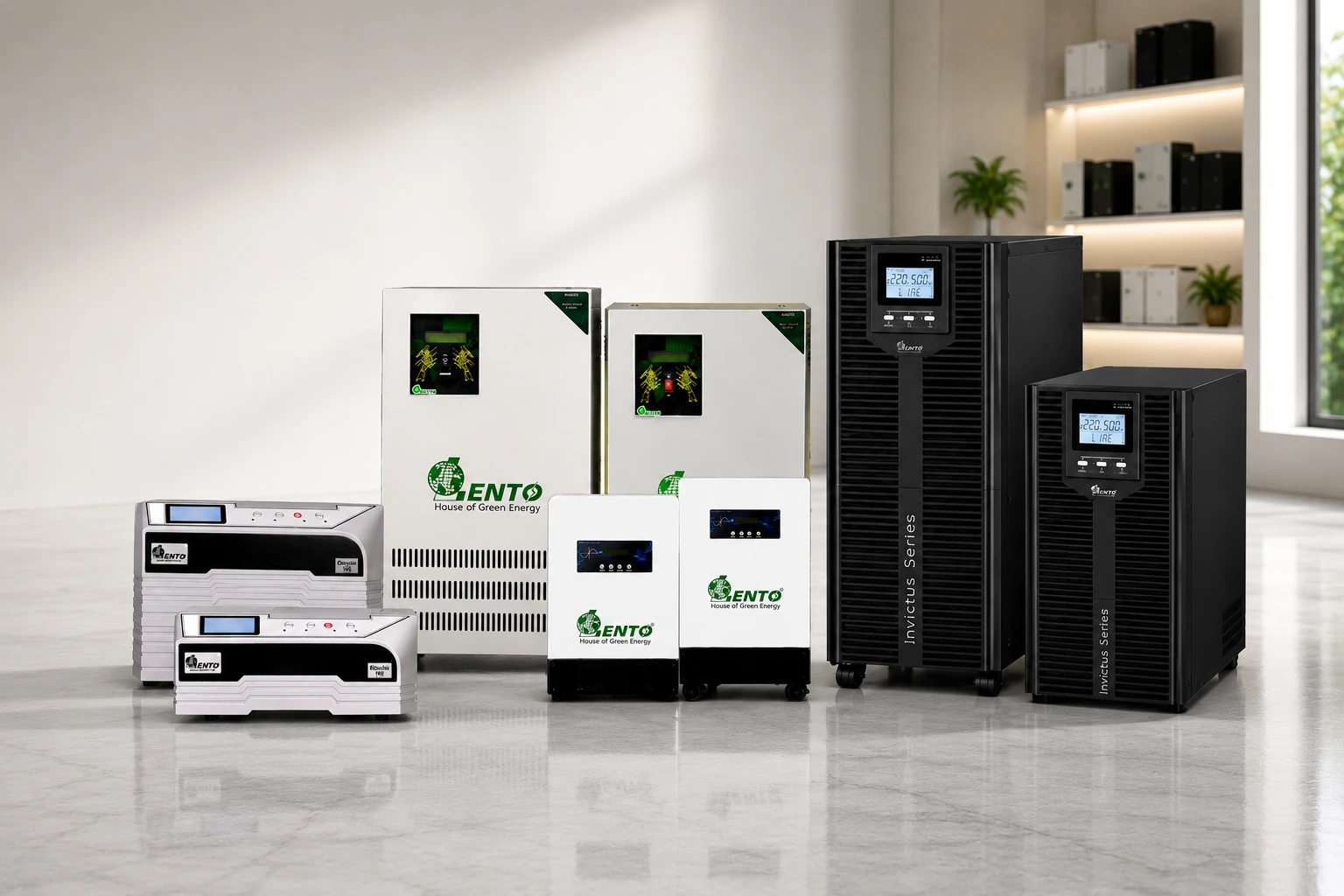
The simplest way to avoid compatibility problems is a solar inverter with lithium battery supplied as one matched unit. Lento Industries Private Limited offers these options:
- Hybrid Solar Inverter with Inbuilt Lithium Battery (OffGrid-PWM): a compact unit with the inverter and battery designed together, ideal as a lithium battery for home inverter use.
- Hybrid Solar Inverter with Inbuilt Lithium Battery (Offgrid-MPPT): MPPT efficiency with an integrated lithium battery.
- Hybrid Solar Inverter (OffGrid-PWM) – Household: an economical best hybrid solar inverter for home option for lights, fans, TVs and refrigerators.
- Hybrid Solar Inverter (Offgrid-PWM) Single Phase – Industrial: a rugged choice for shops and workshops.
- Hybrid Solar Inverter (Offgrid-MPPT) – Wall Mountable: a space-saving, high-efficiency model.
- Hybrid Solar Inverter (Offgrid-MPPT) – Industrial: a heavy-duty unit for factories and institutions.
- Hybrid Solar Inverter (Grid-Tie): grid export with battery backup.
- On-Grid Solar Inverter (Grid Tie): a battery-free option for high daytime consumption.
If you plan to use a separate lithium battery with any non-lithium model, confirm compatibility with Lento's team before purchase.
Common Mistakes to Avoid
- Connecting lithium to an inverter that only supports lead-acid charging.
- Ignoring the BMS current limits.
- Mixing batteries of different type, age or capacity.
- Choosing a battery whose voltage does not match the inverter.
Frequently Asked Questions
What is the biggest problem with lithium batteries?
The main concerns are higher upfront cost, temperature sensitivity and the need for a compatible BMS and charging system. With proper protection and installation, lithium batteries can provide reliable backup.
Which inverter is suitable for a lithium battery?
An inverter compatible with the battery’s voltage, charging profile and BMS requirements is suitable. Lento offers lithium-compatible and inbuilt lithium battery inverter solutions.
How many lithium batteries for a 1000 watt inverter?
The number depends on the battery voltage, Ah capacity and required backup time. A 100Ah 12.8V lithium battery can be suitable for a 1000W-class inverter, subject to the inverter and battery specifications.
What size inverter for a 200Ah lithium battery?
The inverter size depends mainly on the appliances you want to run, not just the battery capacity. A 200Ah lithium battery can support different inverter sizes depending on its voltage, discharge capability and required backup.
Conclusion
You can use a lithium battery with a normal inverter only when voltage, charging settings and BMS protection are compatible. A mismatch can reduce battery life and create safety risks, so verify details with the manufacturer before connecting anything. For a hassle-free setup, Lento Industries Private Limited offers hybrid solar inverters with inbuilt lithium batteries in both PWM and MPPT versions, alongside off-grid, on-grid and grid-tie models. Contact Lento's team to find the right match for your home or business.
Contact Lento Industries Private Limited
Lithium Battery Inverter Manufacturer & Exporter to 24+ Countries
Domestic – +91 9311811396
Toll-Free: 1800 313 0746
Sales & General Enquiries: info@lentoindia.com
Read More:-
Buy Best Hybrid Solar Inverters for Home & Business in India
What Is a Hybrid Solar Inverter?
Best Hybrid Solar Inverter for Home & Industry in India
What is the best brand for hybrid solar inverters?
What Is the Cost of a Hybrid Solar Inverter?
Which Inverter Is Best for Solar in India?
Solar Hybrid Inverter with Battery
Do I Need a Special Inverter for a Lithium Battery?
What is the best brand for hybrid solar inverters?