
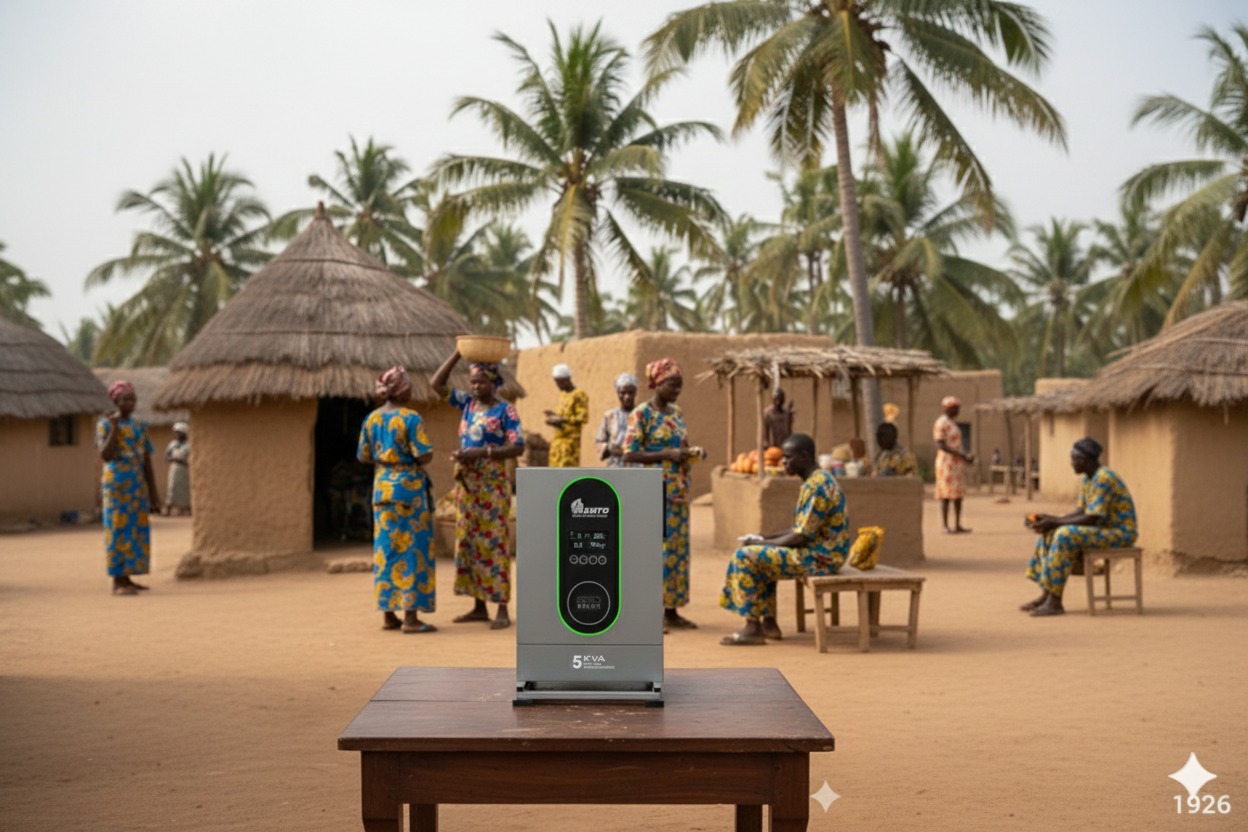
2.5kVA 48V Hybrid Solar Inverter in Nigeria
03 December 2025
As Nigeria continues to experience irregular power supply, the demand for reliable hybrid solar inverters keeps rising. Among the most popular choices is the 2.5kVA 48V hybrid solar inverter, known for its durability, efficiency, and ability to run essential home appliances. Whether you're planning an off-grid solar setup or need backup power for your business, this inverter size offers an excellent balance of performance and affordability.
In this comprehensive guide, we’ll cover the price, best features, specifications, top brands, and buying tips for a 2.5kVA 48V hybrid inverter in Nigeria.
What Is a 2.5kVA 48V Hybrid Solar Inverter?
A 2.5kVA hybrid inverter combines solar + battery + grid (NEPA) power into one system.
It typically uses a 48V battery bank, which improves system efficiency and reduces heat and load pressure.
A hybrid inverter allows you to:
-
Charge batteries from solar panels
-
Charge from PHCN/NEPA
-
Charge from generator
-
Supply uninterrupted power automatically
This makes it ideal for homes, small offices, shops, and small businesses in Nigeria.
2.5kVA 48V Hybrid Solar Inverter Price in Nigeria (2026)
In 2026, the price of a 2.5kVA 48V hybrid solar inverter in Nigeria ranges from ₦170,000 to ₦350,000, depending on brand, features, and warranty.
Price Breakdown by Brand
| Brand | Price Range |
|---|---|
| Luminous | ₦200,000 – ₦300,000 |
| Sukam / Quanta | ₦220,000 – ₦320,000 |
| Bluegate | ₦170,000 – ₦250,000 |
| Mercury | ₦180,000 – ₦260,000 |
| Livguard / Eastman | ₦190,000 – ₦280,000 |
Note: Prices vary by location, dollar rate, and availability.
Features of a Good 2.5kVA 48V Hybrid Inverter
When choosing a hybrid inverter, look for the following features:
1. Pure Sine Wave Technology
Ensures noise-free, smooth operation of sensitive appliances like TVs, fridges, and laptops.
2. MPPT Solar Charge Controller
MPPT increases solar efficiency and charging speed.
3. Smart Battery Management
Helps extend battery lifespan.
4. Multiple Protections
-
Overload protection
-
Battery overcharge protection
-
Short-circuit protection
-
High-temperature shutdown
5. Built-in WIFI or App Monitoring (Optional)
Some advanced models allow mobile monitoring.
What Can a 2.5kVA Hybrid Inverter Power?
A 2.5kVA inverter can comfortably power:
-
3–5 fans
-
8–12 LED bulbs
-
1 LED TV
-
1 small/medium-sized fridge
-
Laptops
-
WiFi router
-
Decoder
-
Phone chargers
It is ideal for 1–2 bedroom homes or a small office.
Recommended Battery Setup for 2.5kVA 48V Inverter
Since the inverter requires 48V, you need:
4 batteries of 12V 200Ah connected in series
This gives you:
-
Longer backup
-
Better performance
-
Lower battery strain
Solar Panel Requirement for 2.5kVA Hybrid Inverter
For efficient solar charging in Nigeria:
Recommended Solar Panel Array: 1000W – 1500W
Example configuration:
-
4 × 300W panels
or -
3 × 450W panels
This ensures fast charging even in cloudy weather.
Top 2.5kVA 48V Hybrid Inverter Brands in Nigeria
1. Lento
Reliable, long-lasting, and good warranty.
2. Mercury
Budget friendly and durable.
3. BlueGate
Good support and stable output.
4. Eastman
Strong solar performance.
5. Sukam
High quality but slightly expensive.
Advantages of a 2.5kVA 48V Hybrid Solar Inverter
-
Supports both solar + NEPA + generator
-
Efficient power conversion
-
Low maintenance
-
Cost-effective for homes
-
Better backup than 12V/24V inverters
-
Helps reduce electricity bills
Disadvantages
-
Requires 4 batteries, which increases initial cost
-
Not suitable for large appliances like AC or deep freezers
-
MPPT models are more expensive
Buying Tips for Nigerians (2026)
-
Choose MPPT over PWM for better solar charging
-
Buy from authorized resellers to avoid fake products
-
Confirm warranty (minimum 1 year)
-
Check compatibility with batteries and panels
-
Avoid extremely cheap inverters—they often fail quickly
Lento India – Global B2B Solar Exporter
Lento India proudly exports solar and power solutions to 24 countries including Mexico, Chile, Peru, Ecuador, Dominican Republic, Afghanistan, Nigeria, Iraq, Uganda, Yemen, Syria, Iran, Oman, Morocco, Egypt, and Kuwait.
We supply solar panels, tubular batteries, SMF batteries, inverters, and Online UPS systems to global distributors, OEMs, and large-scale installers.
If you are a business owner, project developer, or distributor, we welcome you to partner with us for bulk supply opportunities.
Simply share your requirements by our contact form, and our export team will connect with you within 24 hours to discuss pricing, customization, and logistics.
Lento India – Powering industries, homes, and communities across continents with trust and technology.
FAQ – 2.5kVA 48V Hybrid Solar Inverter in Nigeria
1. What are the disadvantages of a hybrid solar inverter?
Disadvantages of Hybrid Inverters
Here are some drawbacks: Higher Cost: They're more expensive than normal inverters. Complex Installation: Requires professional setup, especially with solar integration. Battery Compatibility: Some models may not work with all battery types.
2. How many solar panels do I need for a 48V inverter?
Quick Reference: Solar Panel Estimates for 48V Inverter Systems
| Daily Energy Need | Peak Sun Hours | Panels Needed |
|---|---|---|
| 5 kWh | 5 hours | 3–4 panels |
| 10 kWh | 5 hours | 6–7 panels |
| 15 kWh | 5 hours | 9–10 panels |
| 20 kWh | 5 hours | 12–14 panels |
3. How many watts to charge a 48V battery?
For a 48V battery, a solar array of several 250W or 300W panels in series achieves the ideal 60-90VDC range for effective charging. The solar array wattage must also be sized to meet the battery's amp-hour capacity. A 100Ah battery requires a certain number of amps multiplied by the battery voltage to fully recharge.
4. What is the 80 20 rule for charging batteries?
The 80/20 rule for lithium batteries recommends: Charge up to 80% for daily use. Charge to 100% only when needed, such as before a long trip or a full discharge cycle. Avoid letting the battery discharge lower than 20%.
5. Is charging to 100% bad for the battery?
No, charging a modern smartphone to 100% is not inherently bad for the battery, as devices are designed to handle it safely. However, keeping it plugged in at 100% for long periods can generate heat, which can cause long-term damage. For maximum battery longevity, it is best to charge your phone to about 80% and start charging when it drops to about 20%.
6. How do I keep my battery 100% healthy?
To maintain battery health, avoid extreme temperatures and avoid fully charging or fully draining your battery, keeping it in the 20-80% range whenever possible. Additionally, use your device's optimized charging feature, which learns your charging habits to reduce time spent at 100%.
7. What's the best charging habit?
Best Charging Habits for a Long-Lasting Battery
- Keep Your Battery Between 20% and 80% .
- Use the Right Charger.
- Avoid Overnight Charging.
- Keep Your Phone Cool.
- Enable Battery Saver Mode.
- Avoid Cheap Battery Banks.
- Charge Before Your Battery Hits 10%
Conclusion
A 2.5kVA 48V hybrid solar inverter is one of the best power solutions for Nigerian homes in 2026. It provides stable, clean energy, supports multiple power sources, and can run most essential appliances without issues. If you want an affordable, long-lasting, and energy-efficient system, this inverter size is a perfect choice.